In financial services, scaling without robust planning risks inefficiency, data errors, and customer trust erosion. This article examines strategies for sustainable growth, ensuring operational stability and high service standards while avoiding disruptive chaos during expansion.
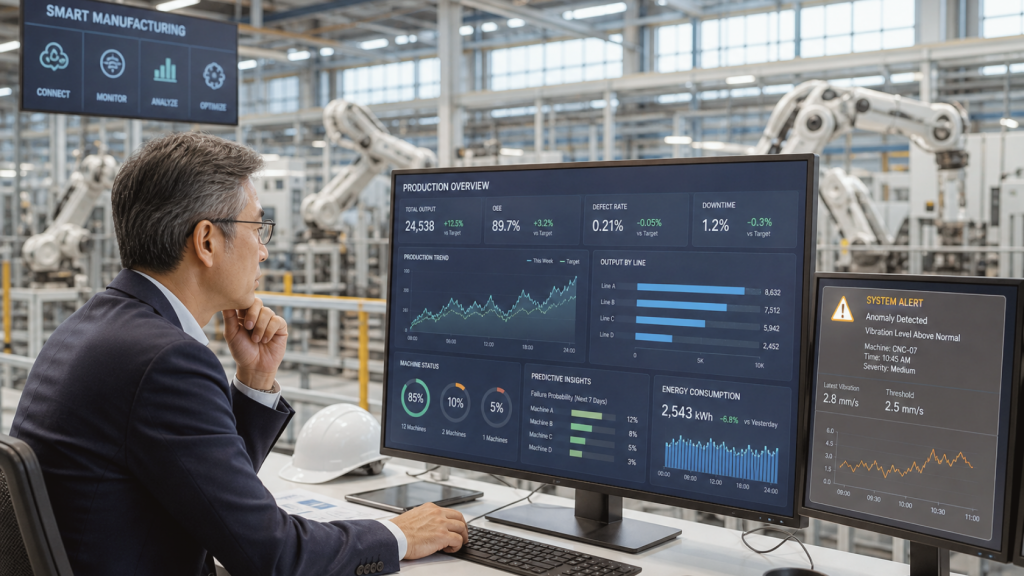
Unplanned expansion in manufacturing can lead to operational chaos, escalating costs, and diminished quality. This article explores strategic pathways to achieve sustainable growth while maintaining efficiency and stringent quality control.
Rapid e-commerce expansion without proper planning often leads to confusion and inefficiency. This article delves into key strategies for building a robust foundation, enabling sustainable growth without overburdening existing systems and teams.
Following critical decisions in financial services, team confidence often wavers. This uncertainty directly impacts strategic execution, risk assessment, and organizational efficiency. This article explores the repercussions and offers strategies for fostering lasting post-decision confidence.
Critical business decisions in manufacturing often bring challenges in maintaining team confidence post-announcement. A lack of confidence can lead to delays, reduced efficiency, and severe impacts on profitability. This article explores the causes and methods for building sustainable trust.
Decision-making in e-commerce doesn't end with an announcement; it begins with team confidence. This article explores the gap between executive approval and genuine team adoption, significantly impacting business performance and growth.
Financial organizations frequently struggle with recalling the origins of critical decisions, leading to fragmented strategies, increased risk exposure, and reduced adaptive capacity. Addressing this requires establishing systematic mechanisms for documenting and accessing "strategic memory" to leverage past learning as a powerful driver for future growth.
When manufacturing organizations forget the rationale behind past decisions, it leads to redundant efforts, increased costs, and missed learning opportunities, hindering innovation and agility in a highly competitive market and eroding long-term competitiveness.
Forgetting the rationale behind past decisions severely impacts e-commerce growth and agility, leading to duplicated efforts, missed opportunities, and future decisions lacking clear direction.
In financial services, scaling without robust planning risks inefficiency, data errors, and customer trust erosion. This article examines strategies for sustainable growth, ensuring operational stability and high service standards while avoiding disruptive chaos during expansion.
Unplanned expansion in manufacturing can lead to operational chaos, escalating costs, and diminished quality. This article explores strategic pathways to achieve sustainable growth while maintaining efficiency and stringent quality control.
Rapid e-commerce expansion without proper planning often leads to confusion and inefficiency. This article delves into key strategies for building a robust foundation, enabling sustainable growth without overburdening existing systems and teams.
Following critical decisions in financial services, team confidence often wavers. This uncertainty directly impacts strategic execution, risk assessment, and organizational efficiency. This article explores the repercussions and offers strategies for fostering lasting post-decision confidence.
Critical business decisions in manufacturing often bring challenges in maintaining team confidence post-announcement. A lack of confidence can lead to delays, reduced efficiency, and severe impacts on profitability. This article explores the causes and methods for building sustainable trust.
Decision-making in e-commerce doesn't end with an announcement; it begins with team confidence. This article explores the gap between executive approval and genuine team adoption, significantly impacting business performance and growth.
Financial organizations frequently struggle with recalling the origins of critical decisions, leading to fragmented strategies, increased risk exposure, and reduced adaptive capacity. Addressing this requires establishing systematic mechanisms for documenting and accessing "strategic memory" to leverage past learning as a powerful driver for future growth.
When manufacturing organizations forget the rationale behind past decisions, it leads to redundant efforts, increased costs, and missed learning opportunities, hindering innovation and agility in a highly competitive market and eroding long-term competitiveness.
Forgetting the rationale behind past decisions severely impacts e-commerce growth and agility, leading to duplicated efforts, missed opportunities, and future decisions lacking clear direction.
This article explores the critical importance of explainable decisions in the financial services sector, fostering transparency, mitigating risks, and building trust with clients, regulators, and internal stakeholders, ultimately leading to sustainable organizational growth and enhanced reputation.
A lack of transparency in operational and strategic decisions within manufacturing leads to inefficiencies and risks. This blog explores how explainable decisions build trust and drive better outcomes at every organizational level.
Unexplainable decisions in e-Commerce breed distrust and stifle growth. Cultivating a culture where every choice, from operational tactics to strategic pivots, is clearly justified enhances efficiency, fosters transparency, and provides a distinct competitive edge.
Decentralizing decision-making in financial services organizations often leads to ambiguity in accountability. The impact is delays in operations and hidden risks. Understanding who is truly responsible is crucial to success.
A large volume of data does not always lead to better decisions. The complexity of data can cause confusion and delay decision-making, impacting organizational efficiency.
Delayed decision-making in manufacturing is not due to a lack of data, but rather from being overwhelmed by excessive information that makes analysis and practical application difficult. This results in missed business opportunities and a loss of competitive advantage.
The massive amount of data in e-commerce can lead to confusion and negatively impact decision-making. Over-reliance on data can cause organizations to overlook critical insights and result in flawed decisions, impacting business performance and profitability.
Focusing solely on data visibility in fintech may lead to overlooking hidden risks. True control is not about seeing everything, but about understanding and managing potential uncertainties.
Focusing solely on quantitative data in a manufacturing plant may cause overlooking hidden risks that impact the business in the long term. Understanding the true context is more important than just looking at the numbers.
Having access to extensive insights does not necessarily equate to actual control over business scenarios. This misconception can lead to poor decision-making and missed business opportunities.
Massive amounts of data in the financial sector often do not lead to actual decisions due to a lack of clarity regarding accountability in the event of errors or delays, which negatively impacts corporate performance and credibility.
Excessive data often leads to confusion and hinders effective decision-making, resulting in lost opportunities and a decline in overall business efficiency.
Many e-commerce organizations are drowning in data but are unable to leverage it for effective decision-making. The complexity and excess of data itself have become a significant obstacle to business operations.
The true risk is the lack of explainability, which erodes executive decision clarity, leading to the cost of indecision and increasing an organization's strategic risk.
The true risk is not merely a number, but the lack of clarity in explaining the origins of results, leading to unseen costs from delayed decisions and production impacts.
In the complex world of e-commerce, the true risk lies not in unforeseen events, but in the inability to explain the genesis of outcomes, particularly the substantial costs arising from executive-level indecision.
This article analyzes the phenomenon of organizations often clarifying decisions only after failure has occurred, exploring the invisible costs of ambiguous decision-making and executive-level risk.
This article provides an in-depth analysis of why organizations often explain decisions after they have failed, revealing the unseen costs of lacking clarity and inaction, which impacts executive-level risk.
An in-depth analysis of why organizations often explain decisions after failure, revealing the unseen costs of indecision and executive management risks.
In a data-driven financial world, the sheer volume of metrics can obscure vision, clouding strategic decision-making and creating hidden costs that impact long-term organizational effectiveness.
Despite vast amounts of data, many manufacturing organizations still lack clear direction. This article explores the hidden costs of ambiguous decision-making and executive-level risk.
In an era of data deluge, e-commerce executives face decision-making challenges. A lack of strategic direction leads to invisible costs, eroding growth potential despite extensive performance measurement, posing a significant risk to organizational momentum.
Despite abundant data, hesitation in leveraging it represents a hidden cost impacting organizational efficiency in the financial sector. This article analyzes the roots of internal data distrust and the lack of executive decision clarity.
Despite abundant insights, organizations remain hesitant to leverage data for decision-making. This article explores the invisible costs of distrusting one's own data and the risks executives face in a data-pervasive era.
In an era of abundant data, why do manufacturing leaders still hesitate to use it for decision-making? This article explores the hidden costs of distrusting one's own data and its impact on strategic clarity and executive risk.
Financial institutions delay approvals despite complete documentation, escalate decisions repeatedly for reassurance, and optimize for safety. But what do they lose while seeking certainty?
Manufacturing plants track downtime as operational cost. But the real expense is the decision that never gets made—to investigate root cause, authorize the fix, and prevent recurrence.
Retail teams see demand signals early but act late. Inventory decisions are debated. Pricing changes are deferred. By the time clarity arrives, the opportunity has passed. What does hesitation cost?
Credit models provide recommendations, yet senior underwriters override them routinely. When does institutional experience become a barrier to trusting the evidence already in front of you?
Retail teams run campaigns because they worked last year, not because current data supports them. When does proven experience become a barrier to seeing what's actually changing in the market?
As AI evolves, businesses need adaptable, AI-driven solutions to stay ahead. Hashed Analytic blends advanced tools with data expertise to improve efficiency and decision-making, helping organizations navigate change with confidence. Explore our use cases to learn more.
AI is transforming low-code data pipelines by automating processing, improving data quality, optimizing workflows, and enabling non-technical users to build faster, smarter, and more scalable data systems.
Hashed Analytic uses AI to help businesses work smarter, enhance decision-making, and operate more efficiently. With advanced tools and strong data expertise, we deliver solutions for automation and analytics that support confident transformation. Explore our use cases to learn more.
Manufacturing plants report strong OEE and utilization rates while firefighting the same breakdowns every quarter. When do the metrics we optimize most become the signals that mislead us?
Financial institutions refine credit models and risk scores continuously, yet human overrides remain routine and approvals stay slow. When do the metrics we trust most become the signals that mislead us?
GenAI is reshaping sales analytics by automating insights, predicting customer behavior, personalizing engagement, and streamlining routine tasks. It helps teams spot trends faster, focus on high-value leads, and make smarter decisions that drive stronger sales outcomes.
Retail teams celebrate rising conversion rates and campaign performance while margins silently erode. When do the metrics we trust most become the signals that mislead us?
Your resume is often reviewed in just a few seconds, so it’s essential to make every detail count. A clear, compelling resume helps you stand out immediately and ensures your strengths are seen right away.
Manufacturing plants rely on experienced operators who know exactly how to fix recurring problems—but can't explain why they happen. When does expertise become a substitute for understanding?
Sales CRM analytics turns customer and sales data into insights that improve forecasting, boost efficiency, personalize engagement, remove bottlenecks, and help businesses grow with smarter, data-driven decisions.
Data risks are rising, from cyberattacks to outages. Co-location keeps business data safe with secure facilities, strong backups, and reliable uptime—ensuring continuity, protection, and lower costs.
Modern data teams face rising costs and complexity. A smart data warehouse cuts waste, optimizes queries, and scales efficiently—helping companies deliver faster insights without overspending.
Stay ahead of industry trends and offer the seamless, modern experience your guests expect. Ready to take your hospitality to the next level? Contact Hashed Analytic today and see how we can help you innovate!”
Businesses generate massive data but struggle to use it effectively. A data assessment reveals gaps, clarifies what matters, and provides a roadmap to turn scattered data into smarter decisions and growth.
Small businesses often face data mistakes—from relying on spreadsheets to poor data quality and scattered systems. Avoiding these issues with better tools and clear processes leads to smarter, more efficient growth.
Agentic AI task management reduces overload by automating decisions, adapting priorities in real time, and streamlining workflows. It shifts teams from manual task tracking to smarter, faster, more efficient work.
Automated housekeeping uses real-time data to optimize cleaning, balance staff workload, enhance room readiness, and improve guest comfort—making hotel operations smarter, faster, and more efficient overall.
AI is transforming healthcare with faster diagnosis, more personalized treatments, smarter hospital operations, and improved patient support—making care more accurate, efficient, accessible, and proactive.
E-commerce teams generate reports daily. Yet approvals slow down, debates intensify, and confidence remains elusive. Why does more data fail to create decision clarity?
Financial institutions have detailed risk models, credit scores, and approval frameworks. Yet decisions remain slow and debated. Why does comprehensive data fail to create confidence?
Manufacturing teams measure OEE, track downtime, and monitor quality metrics daily. Yet the same issues recur. Why does comprehensive visibility fail to prevent operational problems?
ImageML enables fast, accurate document pre-screening, real-time processing, and flexible integration, reducing manual workload and boosting operational efficiency. Its precision also powers advanced automation in industries like robotics.
Streaming data and a real-time lakehouse enable instant insights, smarter fleet coordination, and better customer experiences, helping enhance ridesharing performance and support scalable automation like OCR.
Agentic AI is reshaping travel by automating bookings, delivering real-time updates, personalizing experiences, and improving operations—helping travelers enjoy smoother journeys and businesses work more efficiently.
Project Stargate is a $500B U.S. initiative to build advanced AI infrastructure, create jobs, and strengthen national security, aiming to secure America’s lead in global AI innovation.
Workflow fatigue drains teams through constant tasks and micro-decisions. Agentic AI reduces cognitive load, adapts workflows, and helps teams work smarter with less stress.
AI concierges offer speed and 24/7 service, while humans bring empathy and personal touch. Together, they create smarter, faster, and more meaningful customer experiences.
Agentic AI is transforming real estate by automating tasks, analyzing markets in real time, improving decision-making, and delivering personalized client experiences for faster, smarter property management.
A guide to business continuity: assess data loss, back up systems, strengthen security, use cloud recovery, ensure compliance, test regularly, and refine plans to minimize downtime after disasters.
Though technology is essential, effective MLOps depends on people. Its strength comes from collaboration between technical teams and business leaders to build AI solutions that are both innovative and practical. With strong teamwork, organizations can unlock AI’s full potential and drive lasting impact.
As cyber threats continue to grow in scale and complexity, AI plays a critical role in elevating cybersecurity. By analyzing patterns in real time, detecting risks earlier, and strengthening defensive responses, AI helps organizations stay resilient and ahead of emerging threats.
We help businesses unlock the full potential of AI in logistics and supply chain operations. Curious about how agentic AI can elevate your workflow? CLICK HERE to explore our use cases. To discuss how we can support your supply chain, simply fill out the form on our homepage and our team will be in touch.
A data-driven pipeline, dashboards, and forecasting models helped the school detect truancy risks early, enable timely intervention, and significantly improve student engagement and success.
MLOps streamlines the entire ML lifecycle, keeping models scalable, reliable, and continuously improving. With support from leaders like Google, Microsoft, and OpenAI, it ensures efficient AI operations.
Agentic AI is transforming banking with smarter decisions, automation, fraud detection, and personalized services—boosting efficiency, accuracy, and customer experience while shaping the future of finance.
Inventory forecasting in FMCG uses data, AI, and real-time insights to predict demand, cut costs, reduce waste, improve supply chains, and keep products in stock—helping brands stay efficient and competitive.
Real-time pipelines and ML models enable instant digital lending decisions, stronger risk management, and automated underwriting—insights that also power real-time optimization in sectors like ridesharing.
Our end-to-end MLOps pipeline enables autonomous welding robots to continuously learn from new data, improving precision, efficiency, and productivity while future-proofing operations for evolving manufacturing needs.
AI helps insurers better anticipate and manage risks by revealing real-time patterns and deeper insights. This supports more proactive decision-making and enables tailored coverage that improves resilience, operational efficiency, and overall customer satisfaction.
In a fast-changing workplace, data and AI are crucial for staying competitive. Hashed Analytic provides AI platforms, ML solutions, and cloud migrations to help organizations adapt and grow with confidence.
The data lakehouse is more than a fleeting trend; it’s a transformative force. Businesses that harness its potential stand to reap the rewards of sharper decisions, enhanced service offerings, and deeper customer engagement.
[Click here] to explore our use cases and see how Hashed Analytic improves product inspection. Interested in how YOLO can support your FMCG strategy? Share your details on our homepage, and we’ll reach out.
Whether you're optimizing data workflows or exploring modern data management, understanding the data lakehouse gives you a foundation for smarter, more adaptable systems. The era of the data lakehouse has arrived, bringing new opportunities and insights.
MLOps streamlines model development, deployment, and monitoring to ensure reliable machine learning. From recommendations to autonomous systems, it powers today’s intelligent applications
Data lakehouses enhance supply chains by unifying digital and physical data for real-time visibility, better forecasting, and smoother operations. Our solution helps a global automaker predict demand and keep parts flowing to the assembly line.
As enterprises modernize, scalable data, deeper insights, and intelligent systems are essential. Hashed Analytic builds flexible data platforms, advances ML, and enables smooth cloud transitions to keep organizations agile, innovative, and ready for the future ahead.
As AI accelerates, businesses need smart AI-driven strategies to stay competitive. Hashed Analytic uses technologies like DeepSeek to boost efficiency, reduce costs, and support growth in a fast-changing landscape. Explore our use cases to learn more.
Agentic AI is transforming healthcare with autonomous decision-making, integrated workflows, and personalized care, improving efficiency and patient outcomes while raising new challenges around trust and data.
Understanding these data lakehouse terms helps organizations optimize their data management strategies by ensuring effective integration, analysis, and governance of both structured and unstructured data across their lakehouse architecture.
Titans of the tech industry and agile startups are equally vested in harnessing its potential. It’s not just about efficiency; it’s about crafting experiences that resonate, that feel personal in an increasingly digital world.